Wednesday, 25 July 2012

5 Things to do with Triangles

Looking for something to do with triangles?


I was scratching around for some things to do with triangles to show the kids some interesting properties of these cool shapes. I didn't want to get into Pythagoras at this point but lots of the websites and Youtube clips I found were pretty pedestrian.

So, here’s my contributions about what you can do with triangles. Hopefully they are a bit more stimulating and provocative than “put a triangle on top of a square to make a house”…


1. How many degrees in the sum of the angles of a triangle?

Cut out a triangle. Put a dot in each corner. Cut off the corners. Reassemble them to make a straight line.
How many degrees are there in the sum of the angles of a triangle?
What would happen if you used the corners from a quadrilateral? pentagon? dodecagon?


2. Diagonals making new triangles

Divide polygons up into triangles using diagonals going from one corner to another. How many triangles do you end up with if you start with:
a) a quadrilateral and join up each corner with straight line diagonals?
b) a pentagon and join up each corner with straight line diagonals?
c) a hexagon and join up each corner with straight line diagonals?


What is the pattern you can see emerging here? How many triangles would you expect to make with an octagon? And is there something special about the middle shape you create when you start with an odd-sided polygon?


3. Cross sections of a tetrahedron

Make a playdough model of a tetrahedron. Can you make a shadow that is:
a) an equilateral triangle?
b) a square

Use a plastic knife to cut a cross section. Can you make a cross-section that is:
a) an equilateral triangle?
b) a square


4. Making 3D shapes from triangles

Using triangles made from toothpicks and blutack, make 3D shapes.
a) How many triangles do you need to make a tetrahedron?
b) Ditto for an octahedron?
c) And also an icosahedron?

Have a go at making some of these shapes from cardboard. 
For some useful nets try:
http://www.learner.org/interactives/geometry/platonic.html 


5. Dividing up a triangle

Using a single straight line, cut a triangle into:
a) 2 triangles
b) a triangle and a quadrilateral
c) 2 quadrilaterals (Hmm...not sure about this one - I had an idea when I first wrote it but now I can't remember what it was. Any suggestions?)
d) anything else? (Hint – get away from the literal, flat view and think lateral)


....and have some fun!


Tuesday, 24 July 2012

Students Reflecting on How They Feel About Maths

Times Tables Are Evil

Well, that's what the new boy in my class announced on Day 1 in our first Maths session together.

And it made me wonder.....

.....how can a 9 year old have such strong negative feelings about multiplication facts?

.....what can I do to change this negativity?

.....what are the other kids feeling about Maths in my class?

So what do the kids think about their performance in Maths?

I asked the kids to reflect on their feelings about Maths, specifically about their level of confidence with mathematical thinking. I wanted to try to avoid performance-based self assessment that was confined to "I get good marks, therefore I'm good at Maths" type of comments. This was part of a Semester 1 reflection devised by my good colleague Capitano Amazing (4thgradebigquestions.blogspot.com.au/)

There was also a sliding scale where the children were asked to tick where they felt they were along a continuum from extremely confident to totally confused.

The continuum showed that about half the class is extremely confident and about half are somewhere in the middle. Two students indicated that they were totally lacking in confidence. This is great - now I know what I can do and where I can start with them.

The comments also were interesting - some good, some bad, some very revealing.

Here is a summary of what they said:

The Good


I love Maths. I can safely say I'm good at it too. I try to find Maths in everything I do.

I love doing Maths because it is really fun when we learn something new.

I love Maths!

Maths is awesome!

I like learning my times tables.

I love solving problems.

The Bad


Because I'm horrible.

The Revealing


Sometimes it's really easy and sometimes I think, "Oh no, what am I going to do?"

I don't always understand Maths questions.

I would like to get a bit more confidence in Maths.

I have trouble concentrating.

Most things I am confident with but others things like "Time" and "Division" I need to work on.


Although everyone keeps insisting I'm good at Maths I don't think so because my Mentals is horrible and I don't have the habit to check my answers twice.

I have trouble with carry the one and where to put it. Let's chat please.

So what?

Students have a very significant insight into their own learning. Ask them, they will tell you all about themselves if they are given the opportunity.

Self evaluation gives me so much information to work through that I could not get from other sources. 

As a result, in class we will be spending more time looking at Division, Time and mental strategies.

And yes...we will chat. I will tell you where to put the one when you carry it.


Tuesday, 17 July 2012

Maths and Making a Quilt

My Youngest Daughter is Making a Quilt


We're on holidays and the kids were looking for something to do. My youngest daughter decided to have a go at making a quilt. It was not surpirsing really - sewing is a bit of a family passion - my mum, sister, wife and eldest daughter are all more than competent on a sewing machine. We have several great quilts around the house that are always in demand on winter evenings in Canberra.

So, after a trip with mum to the material shop, Daughter #2 sat down and started to plan out the masterpiece.


"Hey Dad, what's 13 divided by 8?"


And being a good teacher, I answered a question with another question.

"Why do you need to know that?'

"Well, I'm making a pattern that's 10 rows of 8 squares going across. I've got 13 different patterns and I need to know how many of each colour I'm going to need," she replied.

"Right," I said. "And you're thinking that will help you work it out?"

"Yep, because there's going to be 80 squares so if I divide by 8 then I can just move the decimal point over one jump."

Hmm, good strategy but based on faulty reasoning.
And being a good teacher, I let her follow this line of thinking to see where it took her.

It didn't take long.

"Hang on, I think I'm doing it the wrong way round! I need to divide 8, or 80, by 13. So, that's 6 remainder 2. That means I need 6 squares of each pattern but 7 squares of two of the patterns!"

I knew we'd get there in the end.

Here's a patchworking puzzle to try with your kids


Plan out a quilt that is made up of 8x10 squares.

You have 13 different patterns:

3 pink    3 blue   3 green   2 purple   1 brown   1 yellow  

Same colours cannot touch each other.

And if you want to make it harder (impossible?) no row or column can have all 3 pinks, all 3 blues or all 3 greens.


And my daughter's quilt?


It's looking great!


Wednesday, 4 July 2012

Beware the Guru

I was at a meeting a few weeks ago

...and three of the teachers there were introduced by their colleagues as "maths gurus" from their respective schools. Strangely, none of them were bald nor did they show any signs of having spent significant periods of time in their recent history on top of remote mountains.

But it made me think.


3 Reasons You Don't Want to be a Guru

1. You are being set up for failure. It might be fine for now but just wait for that moment when someone finds you using a worksheet you've downloaded from Superteacher.com. "I thought you were a maths guru! You're just like the rest of us!" they will exclaim, all illusions shattered.

2. You might actually believe what people are saying about you. If you think you have reached nirvana already there is no incentive to keep trying to do any better.

3. Your expertise becomes an excuse for other teachers to do nothing, know nothing, try nothing and learn nothing. "I'm not a maths guru like you. Can you do it for me?"


Ultimately We Are All Learners

I am a learner, on the same journey as the rest of my professional colleagues. I have the advantage of age which gives me some degree of perspective when I sit down and reflect on where I've been and where I'm going.

It certainly doesn't make me a keeper of the secret of life, the universe and everything.

Wednesday, 20 June 2012

Bunching Words to Consolidate Concepts

Bunching? What's that?


What is bunching? This is something we use in chapel and RAVE (Religious and Values Education) with our awesome chaplain, Father Richard. We generate a word bank of ideas related to a topic (Fear; Love; Compassion; Lonely) and then kids are asked to find words that they can "bunch" together to tell a story or explain an idea.

When we were doing this on Monday, looking at "The Good Life" as our theme, the potential for extension into other curricular areas hit me. I began to have ideas for how to use this with maths. 

Bunching Maths Concepts and Vocabulary


I made a collection of cards with words related to maths concepts prior to activity to have up my sleeve.

I introduced kids to the idea of the importance of language in understanding ideas and concepts, a link to a previous lesson on numbers and numeration focusing on the concept of "zero". (If there was no word for zero, do you think people had the idea/concept of zero?)

Next, I asked kids to suggest words that are used specifically in maths lessons. If I had a prepared card, I placed it on the floor. If not, then I wrote one out and put it down.

This continued until we had a good selection of 20 or more words.


Then I asked the kids to find words that they could "bunch" together to make a statement about mathematics. Here's a few examples:


"A half is a fraction."


"A number plus another number equals a new number."


"If you have a numerator and a denominator you can make a fraction."


"A half is a fraction but it can be a percentage too."


"When you do division with a number you might get a fraction as the answer."


"Some fractions are less than a quarter."


"Division is like multiplication but going backwards."


So what?


Well, I found this interesting because:
  • kids got to verbalise their understandings. This is important for learning to happen, for knowledge to be consolidated, for kids to move "to the next level". Even stating the obvious things like "a half is a fraction" or "a number plus another number equals a new number" helps them to clarify their understanding.
  • it helps me as a teacher see what the kids are thinking, what they know, what relationships they can see. It's an insight into their inner workings.
  • it gave the kids and I an opportunity to relate to maths in a transdisciplinary way - maths is words as well as numbers.
  • it gives us a springboard for further questions and conversations. Things like, "Does a number plus a number always equal a new number?" "What fractions are less than a quarter?" "How is division the same as multiplication but backwards?" 
Looks like I've got tomorrow's lesson all sorted...


Sunday, 10 June 2012

Top 10 Maths Songs

My Top 10 Maths Songs

Well, reports are written and I can now relax and be a bit flippant. 
Here is my Top 10 list of Mathematical Songs. Hope you enjoy them as much as I do.


10. Rikki Don't Loose that Number - Steely Dan 

Some good advise from a team of dedicated mathematicians who know the importance of keeping track of all your digits.


9. Multiplication - Bobby Darrin 

This was one of those clever 50's songs built around very subtle innuendo and probably the single most influential song in the subsequent baby boom.


8. Number of the Beast - Iron Maiden 

A very funny piece forever linking mathematics with animal welfare.


7. I've Got Your Number - Passion Pit

A popular title for a song, it seems. I like the versions by Passion Pit and Elbow, but who ever has got the number, maybe they could give it back to Rikki?


6. Love Potion Number 9 - The Clovers 

Originally by The Clovers (and covered by many since).


5. Nothing Can Divide Us - Jason Donovan 

A 1988 treatise on prime numbers that proves conclusively
that not every song released in the 80's was good.


4. Can't Take That Away - Mariah Carey 

Advice from Mariah when the subtrahend is larger than the minuend


3. What's the Difference? - Dr Dre 

Demonstrating that hip rapsters are still interested in maths


2. Jenny (8675309) - Tommy Tutone 

In defence of 80's classics, this song implanted a love of numbers into the minds of a generation of impressionable young boys.


1. One is the Loneliest Number - Three Dog Night

Well, what other song could be #1?

Thursday, 7 June 2012

Assess this!

Assessment time again...


Yes - like most of the rest of the teachers on the planet, we are in "assessment mode" right now. Not to say that we don't do continual formative assessment on a daily basis but when the time comes to write reports, we crank out the formal summative tools (ie. pencil and paper tests) just to check our suspicions about our kids. 

And here's a response I got from one of my darlings...


The Task


So the task at hand was to re-write a number in words. Not too much of a challenge, I agree, and probably more to do with Literacy than Numeracy but hey, if you're going to play with numbers you probably should know how to write them. 

I was factoring in some room to maneuver with the spelling (hence the request to "give the spelling your best shot") and therefore I was prepared to accept "threety" as a confused version of "thirty".

But..."two"? He'd got the hard bit - "Sixty five thousand one hundred and..." part right. But what to do with the "two" bit?

At first I gave it a tick - he obviously knew about place value, which was my main concern. His spelling was pretty good. He had things in the right order. Tick - can write 5-digit number in words.

Then hang on, thinks I. The number he wrote is not the number I wanted to read. So it's a fail on the fact that he has communicated a different number. Getting this wrong can have huge consequences.

Writing "4" as "two" might be the difference between getting back from the moon or spending the rest of your days orbiting some distant celestial body. 
A mistake like that might cost your company billions in the next global financial meltdown. 

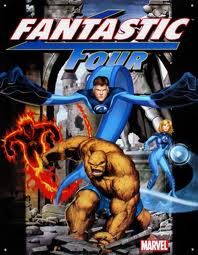
Or if you were expecting the Fantastic Four and only two of them turned up.

Or you went to see the Fab Four and there was only John and Ringo.

So I gave it a cross.

Then I consulted a respected colleague, Capitano Amazing, in the room next door. He was all for giving the cross and marking it wrong.

Conclusion


I now have this problem because I wasn't explicit enough in my own mind about what I was assessing; I am unresolved when I get a student response that only partially fulfills my expectations.

Note to self...


In future - design assessment activities that are going to be measured using well-articulated learning intentions.